How to Choose the Right Robotic Welding System for Your Production?
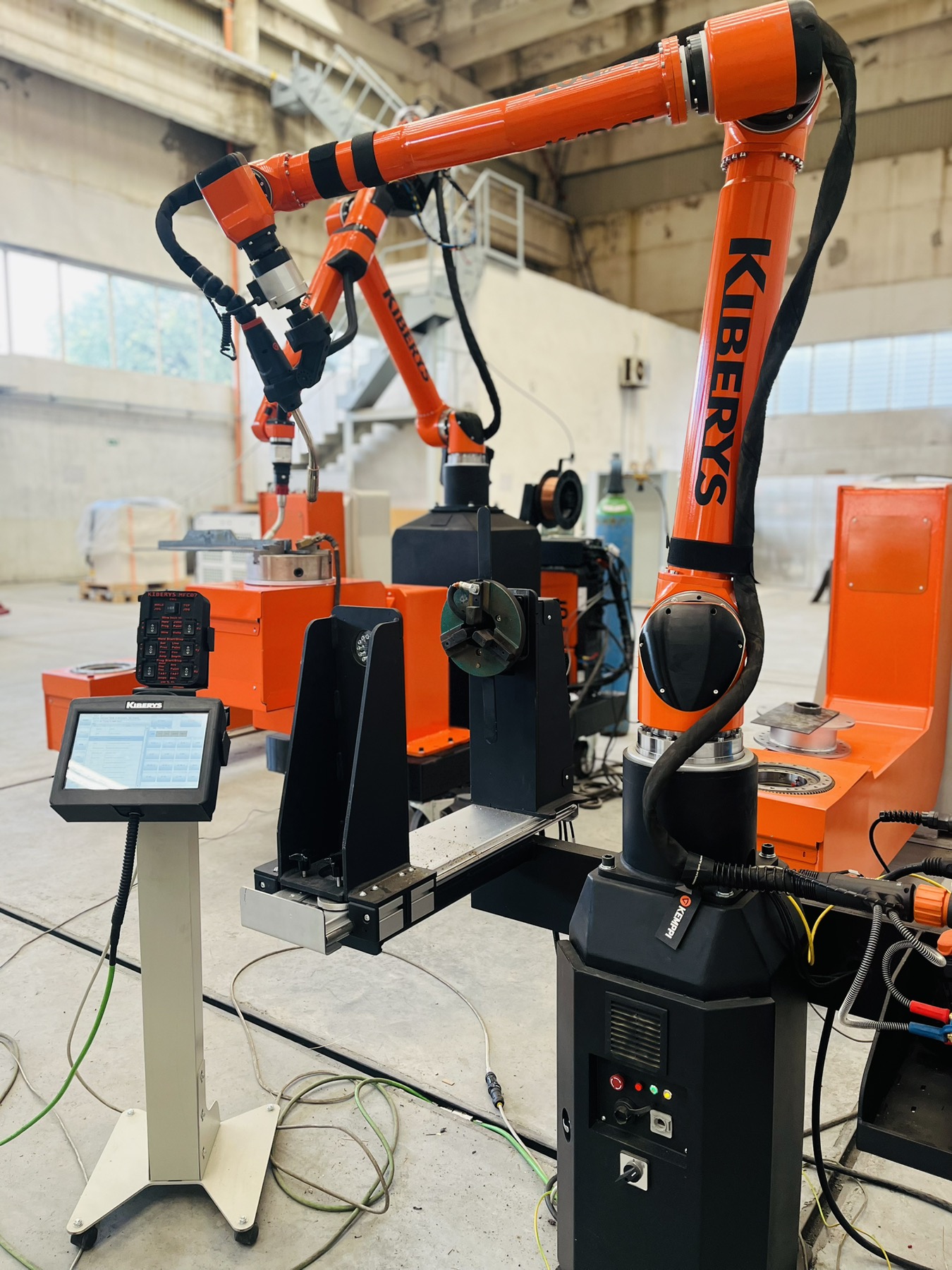
1. What Is a Robotic Welding System? A robotic welding system is more than just a robot. It is a complete solution in which the robot, welding equipment, positioners, seam-tracking systems, and control system work together to automate the welding process. 2. What Types of Parts Will Be Welded? Before choosing a robotic welding system, it is important to define the dimensions, weight, geometry, and material of the parts to be welded. Different products require different working ranges, positioning capabilities, and welding technologies. For small and medium-sized parts produced in series, a compact system such as KIBOT may be suitable. For large structures, pipes, tanks, or boilers, specialized solutions are required, incorporating suitable positioners, rotators, and additional axes, which we typically integrate into our Cartesian robotic systems. 3. Which Welding Process Is Required? The choice of welding process depends on the material, part thickness, joint configuration, and final product requirements. Robotic welding systems can employ various technologies, including MIG/MAG, TIG, SAW, plasma, and laser welding. It is essential to ensure that the robot and welding equipment are properly matched to achieve the required quality, productivity, and repeatability. 4. What Is the Expected Production Volume? Production volume is a key factor when selecting a robotic welding system. For large batches of repetitive parts, automation can significantly increase productivity and reduce manufacturing time. For smaller batches or products that change frequently, system flexibility and ease of reconfiguration are essential. The right solution should therefore be tailored not only to the number of parts being produced but also to their variety and the frequency of product changeovers. 5. How Is the Return on Investment Calculated? The return on investment (ROI) is determined by comparing the cost of the robotic system with the expected savings and additional benefits generated by automation. The calculation should take into account factors such as productivity, labor costs, welding time, scrap reduction, and the ability to operate the system for longer periods with less downtime. The more extensive the production process and the greater the number of repetitive operations automated, the faster the investment can generally be recovered. 6. Examples of Integrated Solutions from KIBERYS • For large structures – KBCWELD HDC • For pipes and heat exchanger panels – Pipe Welding • For tanks and boilers – Tank and Boiler Welding • For precise seam tracking – KVision II • For system programming and control – KBR3000 + offline programming There is no one-size-fits-all robotic welding system. There is only the right solution for your specific production needs. KIBERYS helps you find it.